
Basement leak repair
The most useful moment to photograph a basement leak is when the first drop appears. A wet pipe sleeve, a stain under a window or a trickle down a wall gives a repair contractor more to work with than a puddle across the floor.
A puddle that returns to the same spot
Start with the highest fresh wet mark you can see from a dry spot. Water can follow a sleeve through the wall, run behind drywall and reappear at a baseboard. Note whether it starts with rain, snowmelt or the use of a fixture upstairs. Each points the investigation in a different direction.
A drip as soon as rain begins
A drip that starts as a gutter overflows suggests a nearby surface-water source. From a dry location, note where the downspout releases water relative to that part of the wall.
Moisture hours after the storm
A joint can begin to seep after the surrounding soil has had time to become saturated. Record how long the wet area continues to spread after the rain stops.
Dampness through a dry spell
A stain that grows when a sink or washing machine runs gives the inspection a different starting point. Note the timing before treating a nearby crack or opening.
Trace the first wet spot
A puddle shows where water settled. Before it spreads, take one photo of the first wet surface and a second showing the nearest wall opening. Use those observations to narrow the inspection.
| First wet surface | What to check | What it may mean |
|---|---|---|
| Water at the wall-floor joint | During rain, see whether the wet line grows along the floor edge while the wall above stays dry. | Seepage along several walls calls for a look at footing drainage. A bead along one stretch of the joint can leave water another route out. |
| A wet sill or window frame | From above the well, compare the outside water level with the sill. Note whether runoff flows over the rim. | An overflowing well points toward its inlet and drain. If the well stays dry and moisture follows the frame, inspect the window assembly. |
| A wet ring around a pipe | Check where the first drop forms. Is it on a plumbing fitting, on the cold pipe surface, or in the gap through the wall? | A rain-related leak at the sleeve may suit localized sealing. A drip tied to fixture use needs a plumbing check. |
Matching the repair to the leak
Trace the first wet surface
Compare marks on the wall, floor and nearby openings with what happens outside during rain. This helps separate a single entry point from a longer stretch of joint seepage.
Address the opening and its surroundings
At a pipe penetration, the repair may involve removing failed sealant and resealing the gap between the sleeve and sound concrete. At a window, water that rises above the sill calls for a check of the well and its drain. Water appearing around a dry well points the inspection back toward the frame or adjacent wall.
Check the original leak path
Leave the original entry point accessible until it can be checked under similar conditions. If the repair stays dry but a wet line continues along several walls, map that line before approving another spot repair. Compare drainage options for wall-floor seepage.
Pin down what the leak repair covers
- Keep a short leak record
- Photograph the first wet point and take a wider view showing the nearest window or utility entry. Note when rain began, when water appeared and whether a nearby fixture was running. A dry-day photo from the same angle helps separate old staining from new moisture.
- Agree on the smallest useful opening
- If the wall is finished, ask where an inspection opening would expose the suspected leak and who restores the trim or drywall. Discuss what happens to the scope if the opening reveals a leaking pipe or water arriving from farther along the wall.
- Check the result before closing the wall
- Ask what conditions would make a meaningful follow-up check. A leak triggered by an overflowing well can stay dry for weeks between storms. Keep a view of the entry point until the original trigger recurs and wet materials have dried.
Basement Leak Repair questions
What if the leak only happens during a downpour?
A well can fill or runoff can reach an opening only when rain exceeds the usual drainage capacity. Note whether the water starts immediately or hours later, and whether it stops when the rain eases.
Can the source be found behind finished drywall?
Sometimes nearby trim, the outside wall and the pattern of staining provide enough clues. When the suspected opening is concealed, limited access may be needed to confirm the source and reach it.
Will caulking the inside edge of a puddle help?
A surface bead along the slab can leave the actual opening untouched. Sealing is most useful when the entry point, surrounding material and pressure on the repair have been identified.
What if the pipe is wet even when it hasn’t rained?
Moisture spread over a cold pipe can be condensation. A drip that starts at a fitting when a fixture runs deserves a plumbing check. A wet ring around the opening through the wall after rain suggests seepage at the sleeve. Tell the estimator which pattern you see.
Will a window well cover stop the leak?
A suitable cover can reduce direct rain and debris entering from above. Water can still enter from the sides or collect in a well with poor drainage. Check for a displaced cover and leaf buildup after yard work. If water stands in the well, have its drainage assessed before resealing the window.
What if the water follows a visible crack from top to bottom?
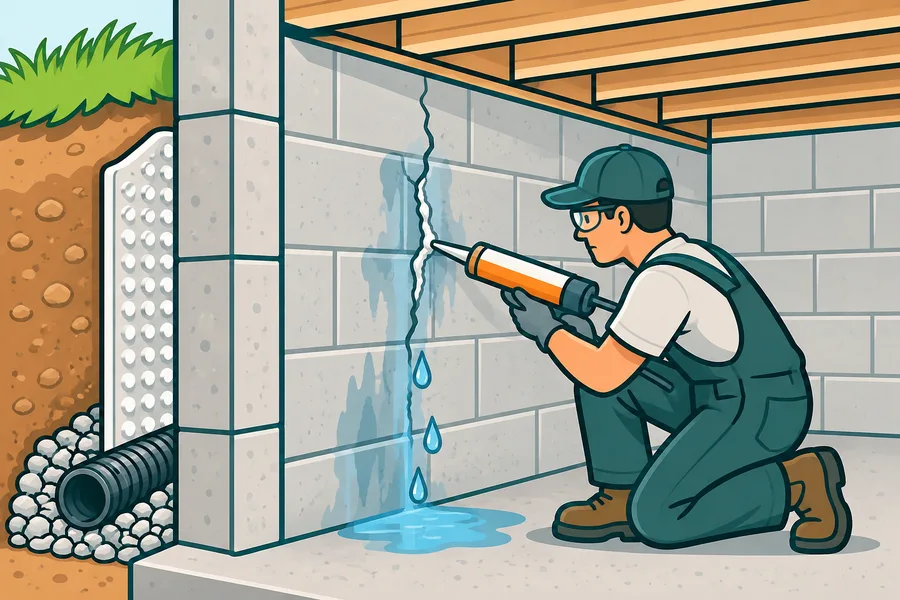
On an exposed wall, trace the damp line to see whether it follows the crack itself. Tell the evaluator if the edges are offset or if an older patch has split. A stable, leaking crack in poured concrete has different repair options from a loose window seal. See when foundation crack injection fits.
Tell us about your basement.
Describe the first place you see water and whether the leak follows rain, snowmelt or everyday plumbing use.