
Foundation crack repair
For a leaking foundation crack, two observations matter most: does water follow the opening, and have the edges moved? Those answers help distinguish a water-sealing repair from a wall that needs an engineer’s assessment.
Does the crack leak, move, or both?
Concrete can develop fine cracks as it dries and shrinks. Loads or movement can also open a crack. A crack below a window corner gives you a place to start the inspection. Look along the wall face for displacement and compare the opening with dated photos or earlier repairs.
A wet line after rain
Water beads or mineral deposits follow a distinct opening in the concrete. Note whether seepage starts at the top, midway down or near the floor.
The opening has changed
A crack that grows wider, extends beyond an old patch or develops an offset needs a fresh assessment before it is sealed.
The wall is out of alignment
Bowing, displaced sections or a prominent horizontal crack warrant structural review before a waterproofing repair is selected.
Reading the pattern of a wall crack
Describe the direction, material and change over time when arranging an assessment. A photo helps document a crack. Structural safety requires a qualified evaluation.
- Vertical
- A narrow line in poured concrete can follow a shrinkage crack. Record any seepage and whether the two edges still sit in the same plane.
- Diagonal
- A sloping line may start at a window corner. Its direction alone cannot tell you the cause. Note any change in width or nearby openings that have begun to bind.
- Horizontal
- Sight along the wall from a safe position. A horizontal crack with inward bowing or displacement calls for a qualified structural engineer before any sealing work.
- Stair-step
- In brick or block, a crack can follow mortar joints around individual units. Offset courses, widening gaps or movement in several places merit structural evaluation.
What should the repair do? For a stable, accessible crack in poured concrete, polyurethane grout may suit water sealing. An engineer may specify epoxy when bonding concrete faces is part of a structural repair. Neither material addresses continuing foundation movement on its own.
When crack injection fits
Identify the wall and crack type
Look for a continuous crack in poured concrete or a stepped path through the mortar joints of block or brick. An open mortar joint can extend through several units. A proposal for injecting solid concrete should explain how it applies to the actual wall material.
Fill the path through the wall
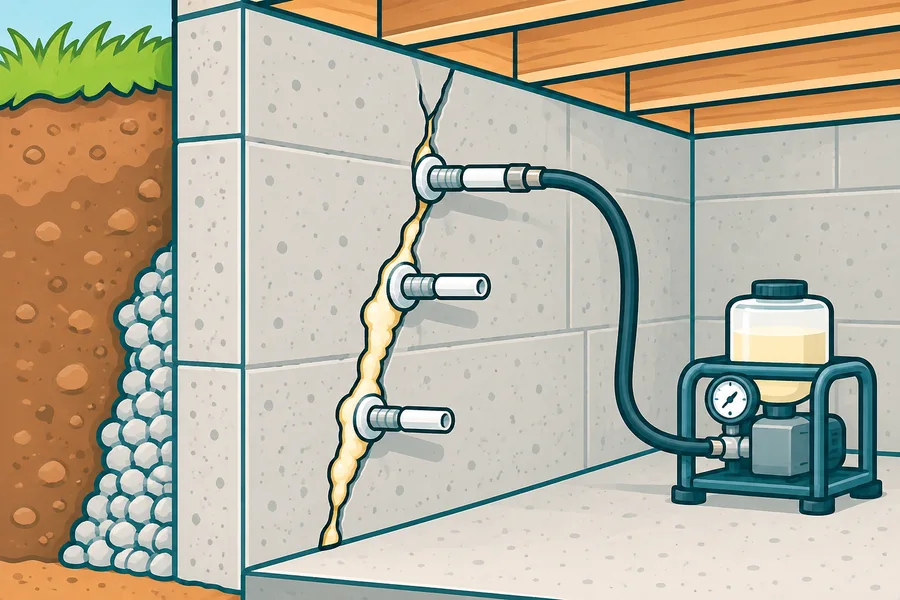
For a suitable concrete crack, ports let the contractor deliver repair material into the opening behind the wall face. The surface seal helps contain the material during injection. A bead painted over the visible line alone does not show how far the water path extends.
Review the repair limits
Check where the first water appears. If the repaired wall stays dry but water emerges from the joint along the floor during prolonged rain, the next inspection should follow the lower perimeter. Explore drainage options at the footing.
What to document before sealing a crack
- A photo that can be compared later
- Take one view of the full wall and a close-up with a ruler beside the same point. Keep the date and camera angle. Note changes in length, width or offset, plus any nearby door or window that has started binding.
- The repair objective and accessible length
- Ask which wall material you have, which part of the crack is exposed and whether the proposal addresses seepage, structural bonding or both. A section behind a finished wall or below the slab may require separate access.
- Evidence the leak has stopped
- Leave the repair visible until it has seen the rainfall that used to trigger the drip. A new wet mark beside the original line, a reopened patch or a change in alignment deserves another inspection before repainting.
Foundation Crack Repair questions
Is a hairline crack always a problem?
Some thin vertical cracks form as concrete shrinks. A dry, stable opening and a widening or leaking one call for different responses. Appearance alone cannot establish structural condition.
Can an old surface patch be injected?
It depends on access to the original crack and the condition of the earlier repair. Tell the evaluator what was used if you know, and point out where seepage has returned.
What if one side of the crack sticks out?
An offset can indicate movement between wall sections. Arrange a structural evaluation before relying on a water-sealing treatment.
What should a crack repair estimate identify?
Look for the wall material, the length of the opening the installer can reach, the proposed material and the purpose of the treatment. If a section disappears behind a stair or into a finished ceiling, ask whether the estimate covers access and restoration there.
Does a stair-step crack in block need the same treatment as a vertical concrete crack?
A stepped crack often follows the mortar between units. The evaluator should check the joints, the units and wall alignment before proposing a repair. Filling a single joint may leave the underlying movement or a separate path through hollow block unaddressed.
Water drips beside a crack, but the crack looks dry. What should I check?
Look above the damp patch for a window edge, pipe sleeve or old penetration. A trail that crosses the crack can come from an opening higher on the wall. Photograph the first wet point before choosing a crack treatment. Trace a basement wall leak.
Tell us about your basement.
Tell us the crack’s direction, where it appears on the wall, and whether you have noticed water or a change in alignment.